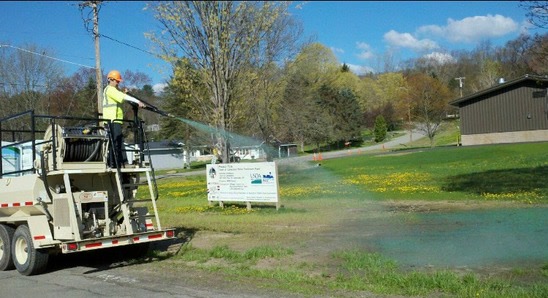
Every disturbed acre on a project is a liability until it is stabilized. It can wash out the grade you just paid to establish, silt a neighbor's ditch, trigger a stormwater violation, or stall a close-out. Stabilization is the last item on the earthwork schedule — and the first thing an inspector looks at.
Why hydroseeding earns its place
Hydroseeding puts seed, mulch, and tackifier down in one pass, bonded to the soil, on ground too steep or too large to blanket economically. Done at the right moisture and the right point in the grading sequence, it establishes cover fast — and fast matters, because the exposure window between final grade and established vegetation is when the site is most vulnerable.
Timing is the whole game
- Seed behind the grader, not behind the schedule. Areas at final grade should get cover as they finish, not when the whole site is done. Phased stabilization keeps the disturbed-acreage number down and the inspections clean.
- Respect the season. In Western New York the spring and late-summer windows do most of the work. Outside them, temporary measures hold the ground until a real seeding window opens — bare ground in November is a plan to do the work twice.
- Water finds the gap. Swales, slope transitions, and outfall areas fail first. Those get the heavier application and the follow-up look after the first real rain.
What it protects
A few cents per square foot of stabilization protects the permit, the SWPPP record, the finish grade, and the relationship with the inspector who will also be on the next job. It is the cheapest insurance on the site — but only if it is treated as part of the earthwork, not an afterthought behind it.
Pilon treats stabilization as part of sitework because that is what it is. If you have a site coming up on final grade, let's talk before the next rain does the talking.